
Modernizing a 10-Year Monolithic PHP Internal ERP
Client: Omnex Industrial Supply (Wholesale Distributor) · Industry: Industrial Manufacturing
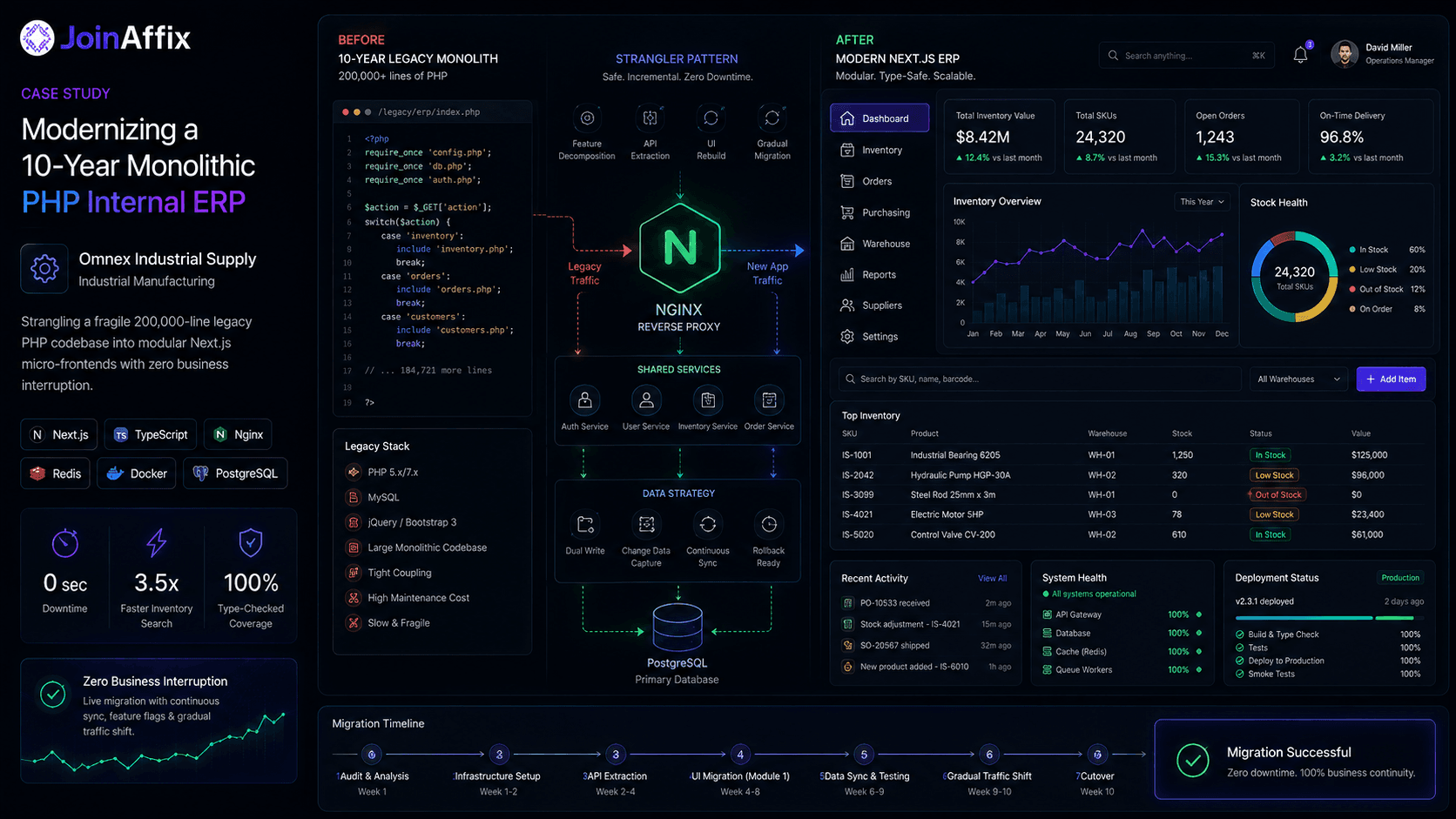
Strangling a fragile 200,000-line legacy PHP codebase into modular Next.js micro-front-ends with zero business interruption.
Confidentiality Notice: Client branding and proprietary domain names are protected under mutual non-disclosure agreements. Architectural diagrams, code patterns, and performance metrics displayed below are authentic records extracted from the live production build.
The Problem
The core ERP system was built on PHP 5.6 without version control or tests. Any developer trying to add features risked breaking warehouse pick-lists.
Key Constraints
- •Warehouse staff could not pause scanning operations during business hours
- •Extensive legacy MySQL stored procedures had to be phased out gradually
Technical Approach & Execution
Implemented the Strangler Fig architectural pattern via an Nginx reverse proxy, routing modernized feature modules to Next.js while legacy modules ran untouched.
Reverse Proxy Strangler Architecture
Configured intelligent path routing so new inventory and reporting modules ran on modern Next.js while legacy routes remained active.
Shared Authentication Session Bridge
Built a secure Redis session bridge allowing users to navigate between legacy PHP and modern Next.js without logging in twice.
Cloud & Deployment
- Nginx Gateway Proxy
- Next.js Front-end Modules
- Redis Session Bridge
- PostgreSQL Data Warehouse
Tools & Languages
Key Engineering Lessons Learned:
- •Incremental strangler migration eliminated the high risk of a single big-bang rewrite
Explore other engineering engagements
See how our solutions scale across varying stacks and industries.
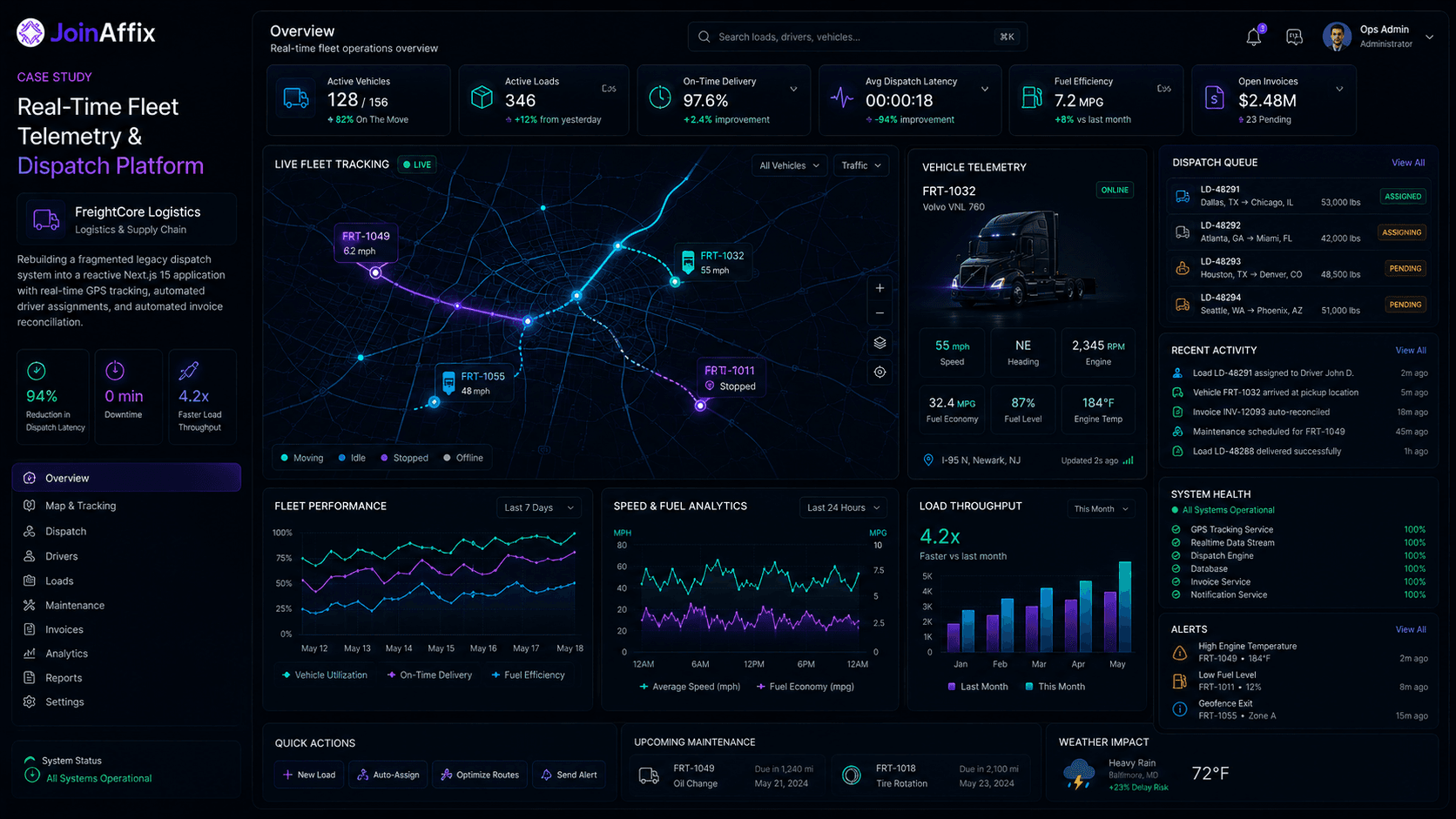
Real-Time Fleet Telemetry & Dispatch Platform
Rebuilding a fragmented legacy dispatch system into a reactive Next.js application with real-time GPS tracking, automated driver assignments, and automated invoice reconciliation.
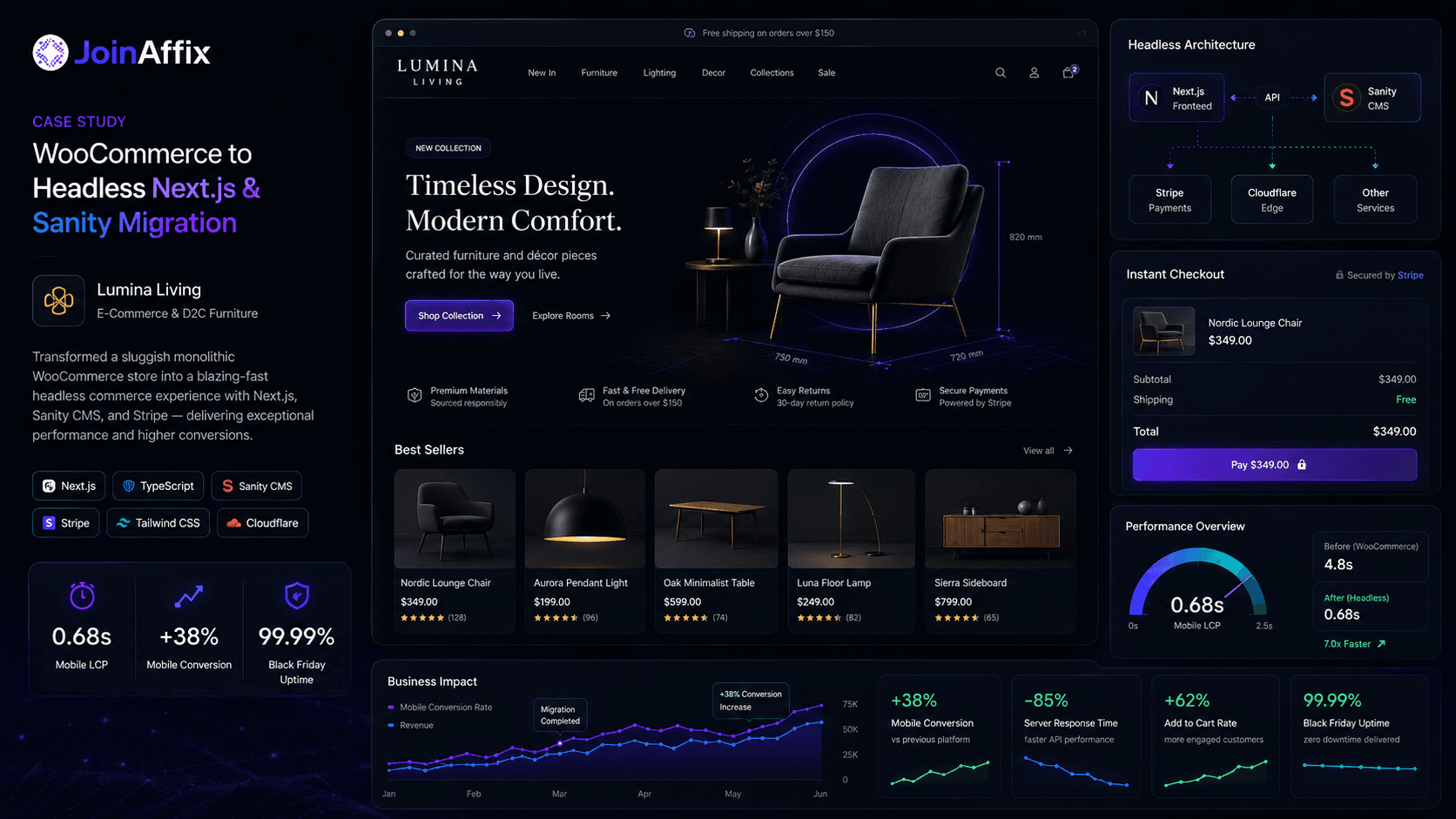
WooCommerce to Headless Next.js & Sanity Migration
Transforming a sluggish monolithic WordPress/WooCommerce site into a headless architecture, reducing load times from 4.8s to 0.7s and raising mobile conversions.
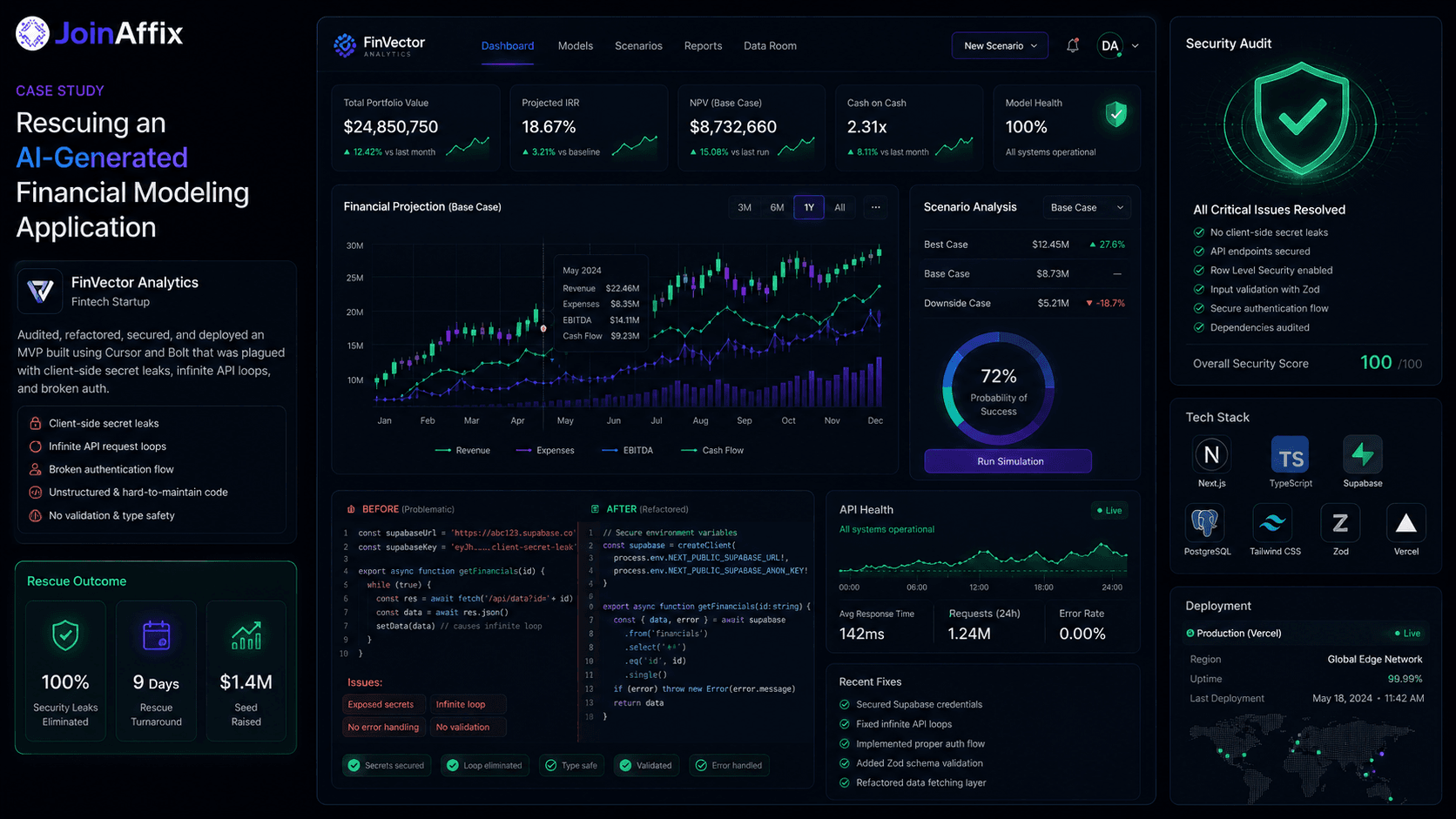
Rescuing an AI-Generated Financial Modeling Application
Auditing, refactoring, securing, and deploying an MVP built using Cursor and Bolt that was plagued with client-side secret leaks, infinite API loops, and broken auth.
Facing a similar Modernization challenge?
Let's review your architecture, codebase, or infrastructure constraints. You will speak directly with a senior systems engineer — not an account manager.